
A white label seo audit report is the document an agency hands a client after checking the client site. It lists what is wrong, ranks the fixes by effect, and says what the agency will do about each one. The report carries the agency brand, and the client reads it as the agency own work. This post shows the sections every audit report needs, a sample of how one reads, and what it should cost.
An audit report is a sales tool and a work plan in one document. The client sees the problems in plain words and sees the fix for each one. That is why the report matters before any monthly work starts. You can see how an audit fits the wider service on our white label seo audit page, which covers the audit itself and what it checks.
Quick answer. A good audit report has seven sections: a summary, crawl and indexation, technical health, on page checks, content gaps, links, and a fix list in priority order. Each finding names the page, the problem, and the fix. The audit is the first step of the monthly service, and the fix list becomes the work plan.
What a white label seo audit report is
A white label seo audit report is a written check of a website, prepared by a partner under an agency brand. The partner runs the checks and writes the findings. The agency logo goes on every page. The client never sees the partner name. The report covers one site, at one point in time, and it answers three questions: what is broken, what matters most, and what will the fix cost in time.
The audit report is not the same as a free scan. A free scan runs a tool and prints the output. An audit report adds judgment: which problems hurt rankings, which ones hurt users, and which ones can wait. That judgment is what the client pays for, and it is what turns a list of errors into a plan the client can approve.
The report also sets the baseline. Rankings, traffic, and technical health as they stand today become the numbers the monthly reports are measured against. A baseline that hides weak spots will cause trouble in month two, when the monthly report shows the same weak spots. An honest audit report avoids that.
The sections every audit report needs
Every audit report has the same seven sections. The order below works for most sites, from a local service business to a B2B firm. Each section has one job, and each one ends with findings the client can act on.
| Section | What it checks | What the client gets |
|---|---|---|
| Summary | The site in three sentences, with the top three fixes | The decision, up front |
| Crawl and indexation | Which pages Google can find, crawl, and index | Missing and blocked pages |
| Technical health | Speed, mobile use, errors, and structured data | The fixes that unblock rankings |
| On page checks | Titles, headings, and internal links on key pages | Pages that need rewriting |
| Content gaps | Services and topics the site does not cover | Pages to build |
| Links | Internal links and the backlinks that point at the site | Weak spots in authority |
| Fix list | Every finding ranked by effect, with the order to do it in | The work plan |
The summary comes first because most clients read only that section. It names the three fixes that matter most, in plain words, and says what each one will do. If the summary needs more than a short paragraph, the audit has not decided what matters yet.
Crawl, technical health, and on page checks form the middle of the report. They show whether Google can reach the site, whether the site works well for users, and whether the key pages say the right things. Content gaps and links close the findings, and the fix list pulls everything into an order the team can follow.
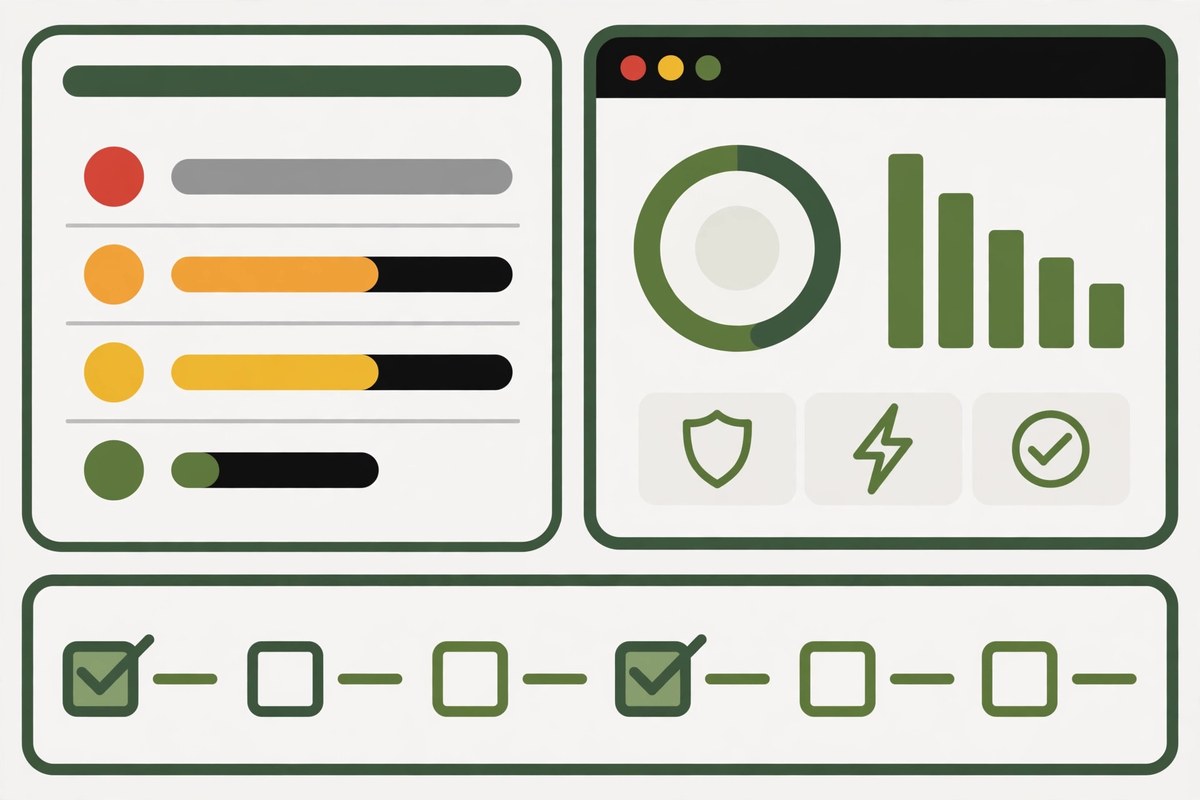
A sample white label seo audit report section
The sample below shows the structure of one audit section, not a real client report. It uses a made up local service business as the example, so you can see the shape of each part. No client names, traffic numbers, or rankings appear here, because a sample should show form, not data.
- Finding. Six service pages return a 404 error, and three of them have backlinks from local directories.
- Effect. Visitors and search engines hit dead pages, and the backlinks point at pages that give nothing back.
- Fix. Restore the three pages with links, redirect the other three to the closest live service page, and check the redirects in Search Console.
- Priority. High. The fix takes under an hour and stops the site losing link value every day it waits.
Each finding in the report follows the same four lines: finding, effect, fix, priority. That shape keeps the report short and keeps the client from having to guess what to do. A finding without a fix is a complaint. A fix without a priority is a list the team cannot order.
The sample also shows the tone to use. Write findings in plain words, name the page, and give the number. Do not write "several pages have issues." Write "six service pages return a 404 error." The client can check a number. The client cannot check "several."

How to read the findings: fix order
The fix list ranks every finding by effect, not by how easy it is to fix. The table below shows the order most audits follow. The first group unblocks the site. The second group improves the pages that already rank. The third group builds what is missing.
| Order | Fix group | Why it comes first |
|---|---|---|
| 1 | Crawl and indexation errors | Pages Google cannot reach cannot rank at all |
| 2 | Technical errors that break pages | Errors and slow pages push users away |
| 3 | On page fixes on ranking pages | Small changes on pages that already rank pay fastest |
| 4 | Content gaps and new pages | New pages take time to rank, so start them early |
| 5 | Internal links and authority | Links work best once the pages they point to are fixed |
Do not start with content gaps. A new page on a site Google cannot crawl well will not rank, and the client will judge the new page a failure. Fix the crawl first, then the pages, then build the missing ones.
For background on the checks Google itself recommends, see the Google SEO starter guide. For page speed checks, use PageSpeed Insights, which reports Core Web Vitals for any URL. A free scan can show the same surface issues; our guide to a free white label seo audit explains where a free tool stops and a full audit starts.
What an audit report should cost
At WhiteLabelSEO, the audit is the first step of the monthly service, not a separate product with its own price. The monthly plans carry the audit and the fixes that follow it. Starter is $900 a month, Growth is $1,500 a month, and Scale is $2,500 a month. Agencies commonly resell Growth at $3,200, which leaves a $1,700 margin, and the audit is what lets the agency show the client why the retainer is worth it. See the full price list on our pricing page.
The price of the audit itself depends on the site. A small local site with 20 pages takes hours. A large B2B site with thousands of pages takes days. The report should say what was checked and how many pages were covered, so the client can see the size of the job. A report that does not say how many pages were checked leaves the client guessing whether the audit was deep or shallow.
Judge an audit report by what it contains, not by its page count. A 10 page report with a ranked fix list beats a 60 page report that prints tool output with no judgment. The sample above shows the test: every finding names the page, the problem, the fix, and the priority. If a report fails that test, it is a scan with a cover page.

Who an audit report fits and who it does not fit
Who it fits
An audit report fits an agency that is starting work with a new client, or pitching a client whose site has never been checked. It fits best when the agency can act on the findings, either with its own team or through a partner. If your agency sells white label seo services and needs a work plan the client can approve, the audit report is that plan.
Who it does not fit
An audit report does not fit a site the agency will not work on, or a client who only wants a free check with no follow up. It also does not fit a site that was audited last month with no changes since. A second audit of an unchanged site finds the same problems and wastes the client money. Our comparison of white label seo audit tools can help when the agency runs the checks itself.
Frequently asked questions
What is a white label seo audit report?
A white label seo audit report is a written check of a website, prepared by a partner under an agency brand. It lists what is wrong, ranks the fixes by effect, and says what the agency will do about each one. The client reads it as the agency own work. It covers crawl, technical health, on page checks, content gaps, and links, and ends with a ranked fix list.
How long does an SEO audit take?
A small local site takes a few hours to check and a day to write up. A large site with thousands of pages takes several days. The time depends on the page count, the error count, and the depth of the content check. Jobs start within 48 hours of the brief at WhiteLabelSEO, and the report date is agreed before work starts, so the client knows when to expect it.
What tools are used for a white label SEO audit?
The checks use Google Search Console for indexation and errors, PageSpeed Insights for speed and Core Web Vitals, a crawler such as Screaming Frog for the full site, and a rank tracker for positions. The tool finds the problems. The auditor adds the judgment about which problems matter most and in what order to fix them. That judgment is the part a tool alone cannot give.
How often should a client site be audited?
Once at the start of the work, then once a year, or after a big change such as a redesign, a move to a new platform, or a sharp drop in traffic. A monthly report tracks progress against the audit baseline, so a new full audit is not needed every month. If the site changes often, a short technical check each quarter catches new errors without repeating the full audit.
Does the audit report include the fixes?
The report lists the fixes in priority order, and the monthly service carries them out. The audit itself is the plan. The fixes are the work that follows, under the same monthly plan. If a client only wants the report, the agency should say so before the audit starts, so the client knows the report ends with a plan, not with fixed pages.
Start with the audit, then work the fix list in order. The report gives the client a reason to approve the work, and the monthly reports show the fixes taking effect. If you want audits and monthly reports under your brand, book a 30 minute call. We sign the NDA on the call and can start your first job within 48 hours of the brief.
On the tooling side, our best white label ai seo tools for agencies 2026 guide compares the AI tools agencies use for white label fulfillment.
If budget is the constraint, our free white label seo tools guide lists the free tools worth using for agencies.