A white label seo analysis tool finds problems on a website fast. It scans pages, links, and technical issues, then turns the results into a score or a list. Done for you analysis goes one step further. A person reads the results, picks what matters, fixes what can be fixed, and reports the work under your brand. This post explains the difference, the cost in time and risk, and how to pick the right one for each client.
Quick answer: Use a tool when you need a fast scan or a first look. Use done for you analysis when a client will read the results, ask questions, or pay a monthly retainer. For most agency clients, the tool starts the work and the service finishes it.
What a white label seo analysis tool actually does
A white label seo analysis tool is software that checks a website and returns findings under an agency brand. The agency logo appears on the tool output or the report, not the software maker name. A seo analyzer platform white label setup lets an agency run scans for many clients from one account and send each client a report that looks like it came from the agency.
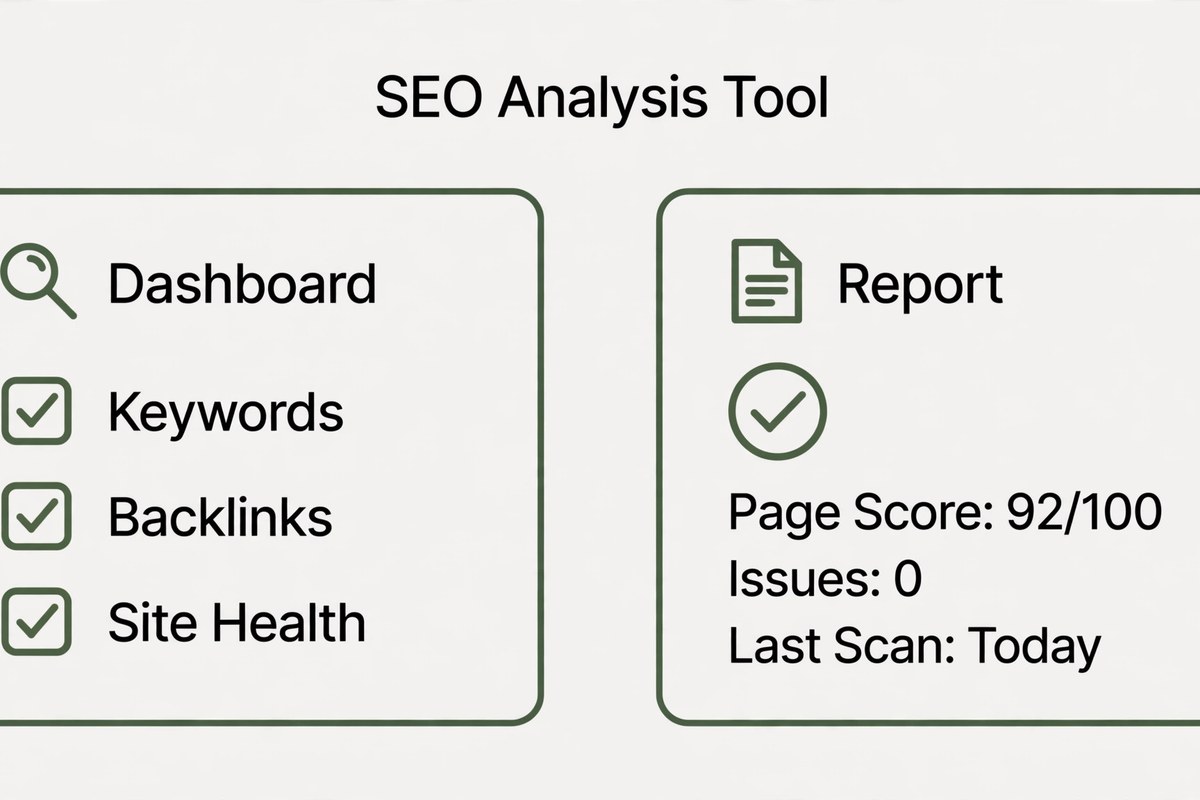
Most tools check the same core areas. They check page titles, headings, and meta descriptions. They check page speed and mobile display. They check broken links, missing pages, and redirect chains. They check backlinks and lost links. They check keyword positions for a set of tracked terms. A white label seo site auditor adds a site health score and a list of issues ranked by severity.
That output is useful, and it is also limited. A tool can say a page is slow. It cannot say whether fixing that page matters more than fixing a broken service page that brings in calls. A tool can list 200 issues. It cannot tell you which five issues will change the client result this month.
Our audit work starts from the same kind of scan. Read the white label seo audit services page for what a full audit covers and how the findings turn into a fix list. The tool gives the data. The audit gives the order of work.
Tool vs done for you: the real difference
The difference is not the data. It is who acts on it. With a tool alone, your team must read the scan, write the fix list, do the fixes, and write the client report. With done for you analysis, the provider does those steps and your agency keeps the client relationship and the brand on every deliverable.
| Question | Tool alone | Done for you analysis |
|---|---|---|
| Who reads the scan | Your team | The provider team |
| Who fixes the issues | Your team or the client | The provider, under your brand |
| Who writes the client report | Your team | The provider, with your logo |
| Who answers client questions | Your team | Your named account lead, with provider notes |
| Best for | Fast scans and first looks | Monthly clients and client facing work |
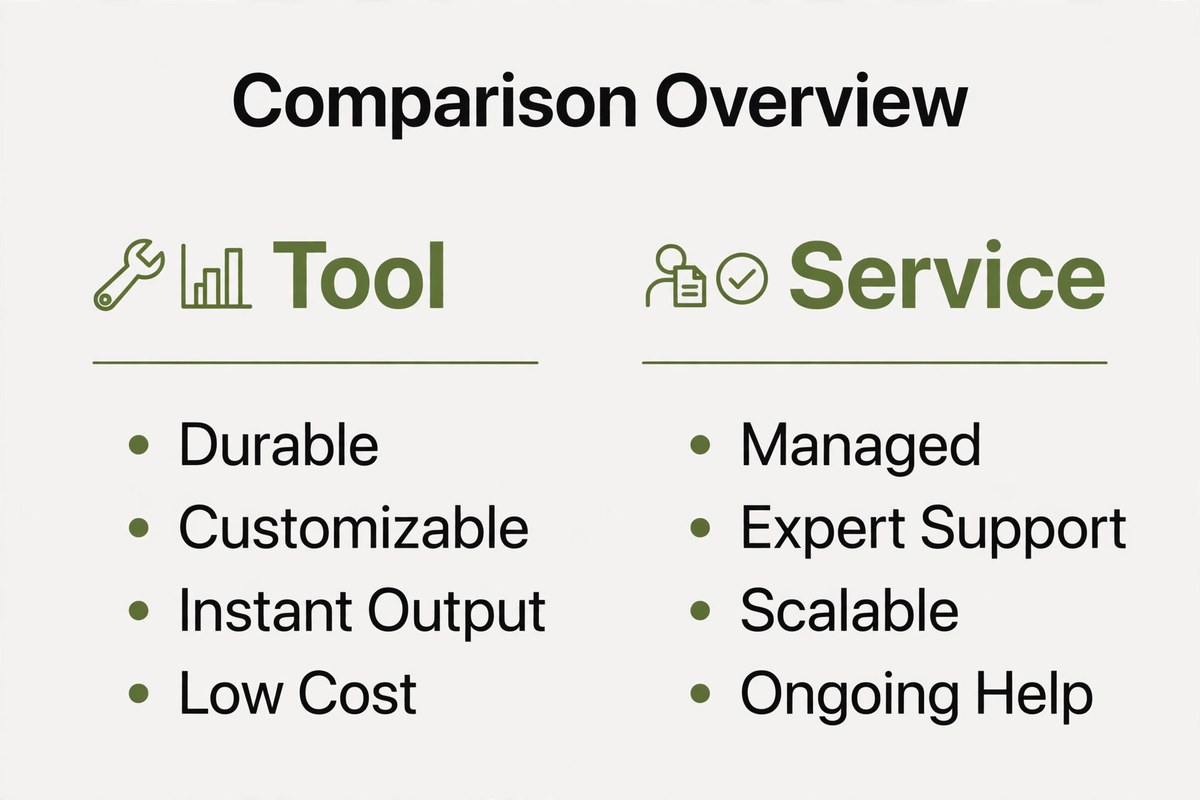
Time is the hidden cost of a tool. A scan takes minutes. Reading it, writing a summary and fixing the issues takes hours. Multiply that by ten clients and the tool creates a queue of unread scans. Done for you analysis costs more per month, but it clears that queue, because the work and the report arrive together.
What the tool cannot do alone
First, a tool cannot set priorities for a real business. It ranks issues by technical severity, not by client revenue. A missing title on a low traffic blog post can outrank a broken booking page in a tool report, even though the booking page costs the client calls every day. A person who knows the client business puts the booking page first.
Second, a tool cannot write for a client who is not technical. Tool reports use terms like crawl depth, canonical chains, and schema errors. Most small business owners stop reading at the second term. A done for you report translates each finding into one plain sentence: what was wrong, what was fixed, and what happens next.
Third, a tool cannot judge risk. Some fixes are safe at once. Some change URLs or content that ranks well today. A tool flags both kinds the same way. A person checks the second kind first, so a fix does not cause a new problem.
Fourth, a tool cannot keep a client. Reports alone do not retain clients. A named contact, a reply within 4 business hours, and a report that arrives on time each month does that. Those are service traits, not software traits.
How done for you analysis works at WhiteLabelSEO
Done for you analysis at WhiteLabelSEO follows a fixed order, so you can promise it to a client without guessing.
- Brief. You send the client site, the goals, and any access the work needs. A signed NDA comes before any client information is shared. You can use our NDA or send yours.
- Scan and read. Jobs start within 48 hours of the brief. The team runs the scan, then reads it against the client goals and picks the fix order.
- Fix. The team applies the agreed fixes, or sends your team a fix list when the client site needs their developer. Revisions are included.
- Report. A monthly branded report is delivered on the 3rd of every month. It shows what was found, what was fixed, and what comes next.
- Review. One named account lead answers questions and tracks the next month. A missed deliverable means that month is not charged.
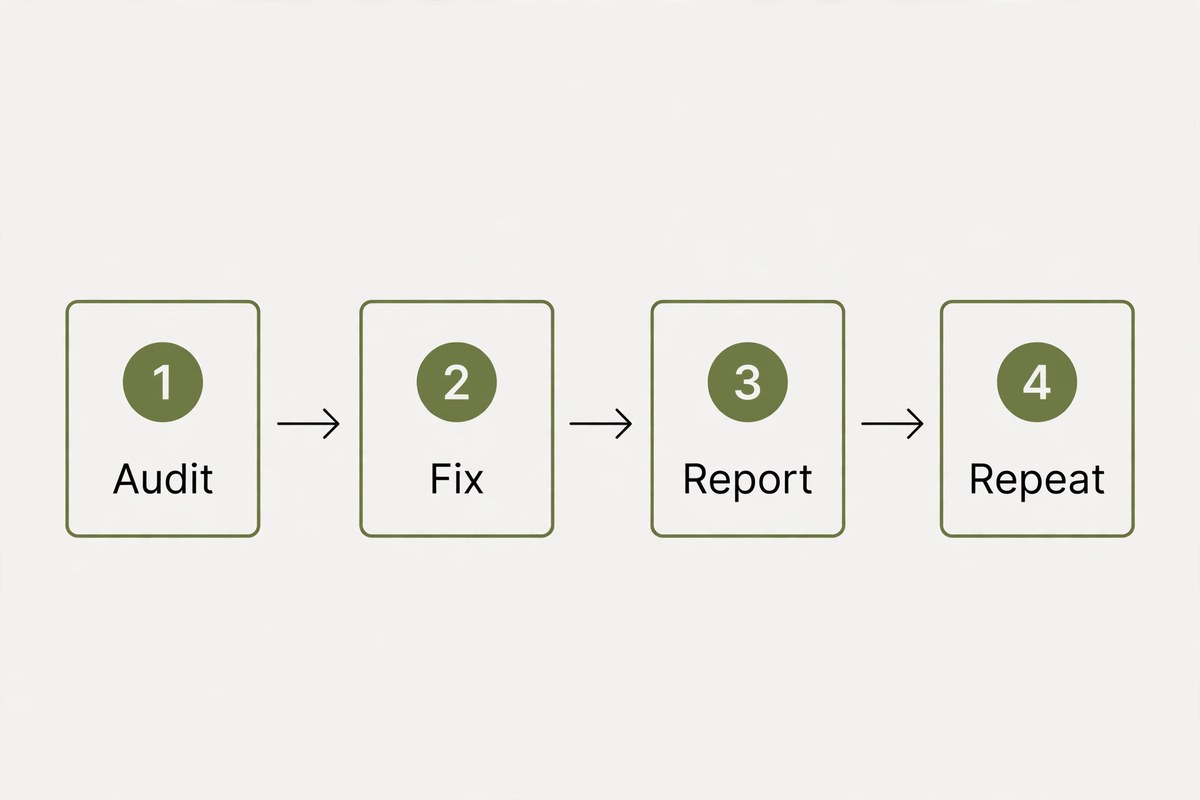
That order turns a tool output into a service. The scan is step two of five, not the whole product. Sell a scan as a full service and the client will notice in month two, when nothing has changed.
A worked margin example
Price the two options the way an agency owner prices them: cost, resale, and margin left after the work.
Take the Growth plan at $1,500 a month. Typical agency resale on that tier is $3,200 a month. The margin is $3,200 minus $1,500, which equals $1,700 a month. That margin pays for your client calls, your sales time, and your profit. A tool subscription alone looks cheaper, but the hours your team spends reading scans and writing reports come out of that same margin, and they grow with every client you add.
Take the Starter plan at $900 a month, with typical resale of $2,000 a month. The margin is $2,000 minus $900, which equals $1,100 a month. For a small site, that margin can fund a tool plus a few hours of your time. For a large site, the hours grow past the margin fast, and done for you analysis costs less in total.
Read the white label seo audit tool guide to compare tool features before you buy a subscription. Read the white label seo software guide for how agencies run tool stacks across many clients. Both guides help you judge a tool on its own terms, before you decide whether to add a service beside it.
A checklist: tool, service, or both
- The client needs a one time scan with no fixes. A tool alone fits.
- The client will read the report and ask questions. Done for you analysis fits.
- Your team has free hours to read scans and write reports. A tool alone fits.
- Your team is full and clients wait for reports. Done for you analysis fits.
- The site is small and the issues are simple. A tool alone can work.
- The site is large, local, or earns calls and bookings. Done for you analysis fits.
- You need the agency logo on every report. Both options can do this, but check the tool plan, since branding often sits in a higher tier.
- You need a named contact and a fixed report date. Done for you analysis fits.
Who this fits, and who it does not
Done for you analysis fits an agency with monthly clients who expect a branded report and a named contact. It fits an agency that is full and needs delivery without hiring. It fits agencies whose clients judge the work by calls and bookings, not by tool scores.
It does not fit a one time scan with no follow up work, an agency that wants to keep all analysis in house, or a client who only wants a score and will not approve fixes. In those cases, buy the tool, run the scan, and keep the scope honest.
For the rules that govern sound SEO work, see the Google Search Central SEO starter guide and Search Console help.
Our terms stay simple: month to month, 30 days notice to cancel, no setup fees, no annual contract, one named account lead, and a signed NDA before client data is shared. See our signed NDA page for the exact terms. White label seo services for agencies cover the monthly work, and white label seo pricing lists every tier and discount in plain numbers.
Start with the question, not the software. What does this client need to see, fix, and keep? If the answer is a fast scan, buy the tool. If the answer is fixes, reports, and a contact who replies, buy the service. Then book a 30 minute call to price the right mix for your next client.
Frequently asked questions
What is a white label seo analysis tool?
A white label seo analysis tool is software that scans a website for SEO issues and returns the results under an agency brand. It checks pages, links, speed, and keyword positions, then produces a score and a fix list. The agency logo appears on the output, so the client sees the agency, not the software maker. It finds problems. It does not fix them on its own.
Is a tool enough for client SEO work?
A tool is enough for a fast scan or a first look, but not for monthly client work on its own. Monthly work needs priorities set by business value, fixes applied, and a branded report a client can read. A tool lists issues by technical severity, which often puts a low value page ahead of a page that brings in calls. A person must set the order.
What does done for you analysis include?
Done for you analysis includes the scan, a human read of the results, the agreed fixes, and a branded monthly report. At WhiteLabelSEO it also includes one named account lead, a 4 business hour response commitment, jobs that start within 48 hours of the brief, revisions, and a report on the 3rd of every month. A missed deliverable means that month is not charged.
How much does done for you analysis cost?
White label SEO costs $900 a month for Starter, $1,500 for Growth, and $2,500 for Scale. Typical agency resale runs $2,000, $3,200, and $5,500 or more on the same tiers. For Growth, resale of $3,200 minus a cost of $1,500 leaves a margin of $1,700 a month. Check the pricing page for the full tier list and the discounts that lower the cost honestly.
Can I use a tool and a service together?
Yes, and many agencies do. Use the tool for fast scans, first looks, and spot checks between reports. Use the service for monthly clients, fixes, and client facing reports. Keep the boundary clear: the tool scans, the service fixes and reports. When the boundary blurs, clients receive scans instead of fixes, and the agency must answer questions the scan alone cannot answer.