A b2b seo audit is a structured check of a business to business website before you sell SEO work or start a new retainer. It tests whether search engines can find and read the site, whether pages match what buyers search for, and whether a visit can turn into a sales conversation.
This post is for agency owners who serve B2B clients and want one audit they can run the same way for every client. You will get a copyable b2b seo checklist, a scorecard, and a plan for turning findings into a retainer. The parent guide is b2b seo strategy.
Quick answer: audit technical access first, then content fit, then conversion paths. Fix blocks that stop indexing or contact before you spend on new pages.
What a b2b seo audit covers
A B2B audit has three parts, and all three matter. Technical checks test access, speed, and structure. Content checks test whether pages answer real buyer questions. Conversion checks test whether a reader can reach sales without friction.
B2B buying differs from consumer buying in one important way. Several people shape the decision, and each person searches with a different question. A technical buyer checks specs and integrations. A finance buyer checks cost and risk. A senior buyer checks proof and fit. Good seo site audits for b2b websites test pages against each of those questions, not against traffic alone.
Run the audit in the same order every time. That order keeps results comparable across clients, and it keeps the client report easy to read. Start with access. Move to content. Finish with conversion.
Technical checks: where the b2b seo checklist starts
Technical problems hide good content. A page that search engines cannot reach cannot rank, no matter how well it is written. Check access before you judge wording.
- Search Console coverage: confirm which pages are indexed, which are excluded, and why each exclusion exists.
- Robots and sitemap: confirm the robots file allows the pages that should rank, and the sitemap lists live pages only.
- Redirects and canonicals: confirm old URLs redirect to the right live page, and each page names one canonical URL.
- Speed and Core Web Vitals: test with PageSpeed Insights, and note the slowest templates first, not single pages.
- Mobile rendering: confirm key pages render cleanly on a phone, since buyers often open a link from email or chat.
- Internal links: confirm service pages, comparison pages, and contact pages are reachable in a few clicks from the home page.
- Schema: confirm the pages that need structured data carry it, and test it with a validator before you report it.
Record each finding as a fix, not as a grade. A finding should name the page, the problem, and the next step. "Slow site" helps no one. "Pricing page loads slowly on mobile, compress the hero image first" gives the team a job. For source guidance on search visibility, see Google Search Console help and the Google SEO starter guide.

Content and intent checks for a b2b website seo audit
After access is clear, test fit. A b2b website seo audit asks one question per page: does this page answer the question its searcher asked? If the answer is no, the page needs a rewrite, a merge, or a redirect, not more words.
| Page type | Question it must answer | Common gap |
|---|---|---|
| Service page | What do you do, for whom, and what happens next | Vague scope and no clear next step |
| Comparison page | How does this option differ from the alternatives | Claims with no detail the buyer can check |
| Integration page | Does it work with the tools we already use | Tool names with no setup detail |
| Proof page | Has this worked for a company like ours | Results with no context or method |
Check for overlap next. Two pages that answer the same question split the result and confuse the buyer. Merge the weaker page into the stronger one, and redirect the old URL. Keep one page per buyer question.
Check dates and facts last in this section. Old pricing, retired features, and dead links cost trust fast in a B2B sale. Remove what is no longer true, and note what the client must confirm before the page goes live again.
Conversion checks: from visit to sales conversation
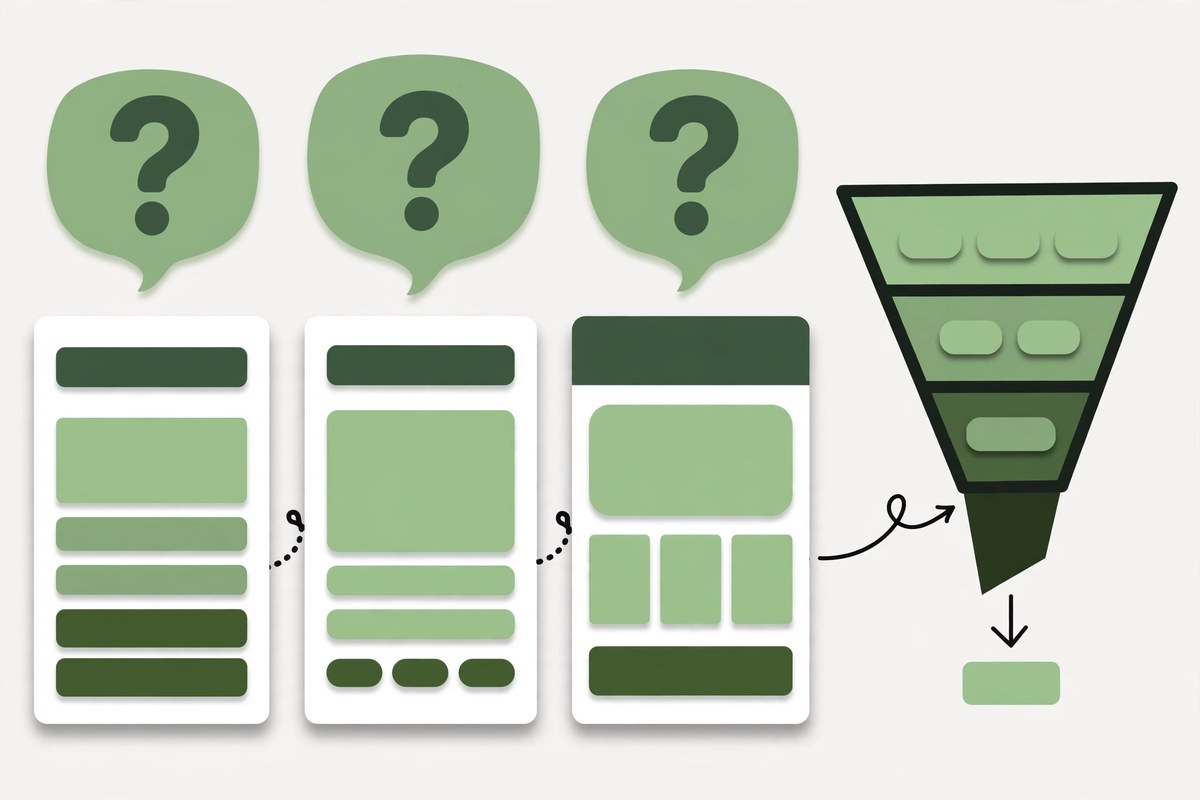
Traffic that cannot convert is a report number, not a pipeline. Test every path a buyer might take, and test it as a buyer would, on a phone and on a desktop.
- Forms: confirm each form sends, confirms receipt to the sender, and routes to the right inbox.
- Contact paths: confirm phone, email, and booking links work from every key page, not only from the contact page.
- Calls to action: confirm each key page asks for one next step, and that step matches the stage of the sale.
- Tracking: confirm Google Analytics 4 records form sends and calls as events, so the report shows leads, not only visits.
- Speed on key pages: confirm demo, pricing, and contact pages load cleanly, since these pages carry the sale.
Note any step that asks for too much too soon. A first visit reader may want a guide or a short call, not a full demo form with ten fields. Match the ask to the stage, and the form will convert more often.
What ai seo audits b2b can and cannot do
AI audit tools can scan a site fast, group issues by type, and draft a first summary. That speed helps on a large site, where a manual crawl would take days. Use the tool for the scan, and use a person for the judgment.
An AI scan cannot judge buyer fit. It cannot tell whether a page answers a finance buyer or a technical buyer. It cannot tell whether a claim matches the sales process, or whether a proof page fits the clients the agency wants. A person must review every finding before it reaches a client.
Set one rule for AI output in your agency: no AI finding goes to a client unchecked. Read the finding, open the page, and confirm the problem yourself. That rule keeps the audit honest, and it keeps the agency credible when the client asks a hard question.
Score the audit and turn it into a plan
A scorecard turns a long issue list into a plan the client can approve. Use three grades only. "Fix now" covers blocks to indexing, contact, or trust. "Fix next" covers pages that rank but convert weakly. "Watch" covers small issues to revisit after the first fixes land.
| Area | Grade | First fix |
|---|---|---|
| Technical access | Fix now | Repair indexing blocks and bad redirects |
| Content fit | Fix next | Rewrite or merge pages that answer the same question |
| Conversion paths | Fix now | Repair broken forms and unclear next steps |
| Proof and trust | Fix next | Replace vague claims with checkable detail |
Turn the scorecard into steps with owners and order. Step one repairs access and conversion blocks. Step two rewrites or merges the weakest pages. Step three builds the missing comparison and proof pages. Step four reports results in the monthly branded report.
When WhiteLabelSEO runs delivery, the same facts apply that apply to every partner job. One named account lead owns the work. Jobs start within 48 hours of the brief. The response commitment is 4 business hours. The monthly branded report arrives on the 3rd of every month, and a missed deliverable means that month is not charged. Read the full service scope on white label seo services for agencies.
What the margin looks like when an audit leads to a retainer
An audit earns its keep when it leads to a retainer the agency can deliver at a real margin. Use posted prices for the arithmetic, so the client and the agency see the same numbers.
Take the Growth plan at $1,500 per month in partner cost. Resell it at the typical $3,200 per month. The margin is $1,700 per month per client. Two clients at that level give $6,400 in resale against $3,000 in partner cost, which leaves $3,400 per month before the agency's own time and overhead.
See the full posted plans on white label seo pricing. Price the ongoing work from those plans, and scope the audit time in the brief, so the client sees what the first month covers. A related tool guide, white label seo audit tools, covers how to test audit software before you buy it.
Who this is for, and who it is not for
This checklist fits agencies that serve B2B or SaaS clients, run audits as the first step of a retainer, and want one repeatable method across clients. It also fits agencies that already sell SEO and want audits to show why a retainer is needed.
It does not fit a one page fix, a site that needs only a design change, or a buyer who wants a ranking promise. An audit can show what is broken and what to fix first. It cannot promise a position, and any audit that does should be read with care.
Frequently asked questions
What does a b2b seo audit include?
A b2b seo audit includes technical access checks, content fit checks against buyer questions, and conversion path checks from visit to contact. It ends with a scorecard that grades each area and names the first fixes in order, so the client can approve a plan rather than read a long issue list.
How is a b2b seo audit different from a general audit?
A general audit often stops at technical issues and traffic. A B2B audit also tests whether pages match the questions of each person in the buying group, and whether the site moves a reader toward a sales conversation. Traffic alone cannot show that, so the audit must test intent and conversion too.
Should an agency share the full audit with the client?
Share the scorecard and the ordered fix list, and keep the raw crawl data in the agency file. Clients act on a short plan with owners and order. A raw list of hundreds of issues, with no grades, tends to stall the sale and hide the fixes that matter most.
Can an AI tool run a b2b seo audit alone?
No. An AI tool can scan and group issues fast, but it cannot judge buyer fit, sales process, or client priorities. A person must open the pages, confirm each finding, and grade it before the audit reaches a client. Unchecked AI output risks wrong fixes and lost trust.
What happens after the audit?
The audit becomes an ordered plan: fix access and conversion blocks first, then rewrite or merge weak pages, then build missing comparison and proof pages. Ongoing work runs as a retainer with a monthly branded report, so the client sees progress in the same format each month.
Book a 30 minute call to talk through an audit for a B2B client. Use Book a 30 minute call, and bring the scorecard grades for the site you want to review first.