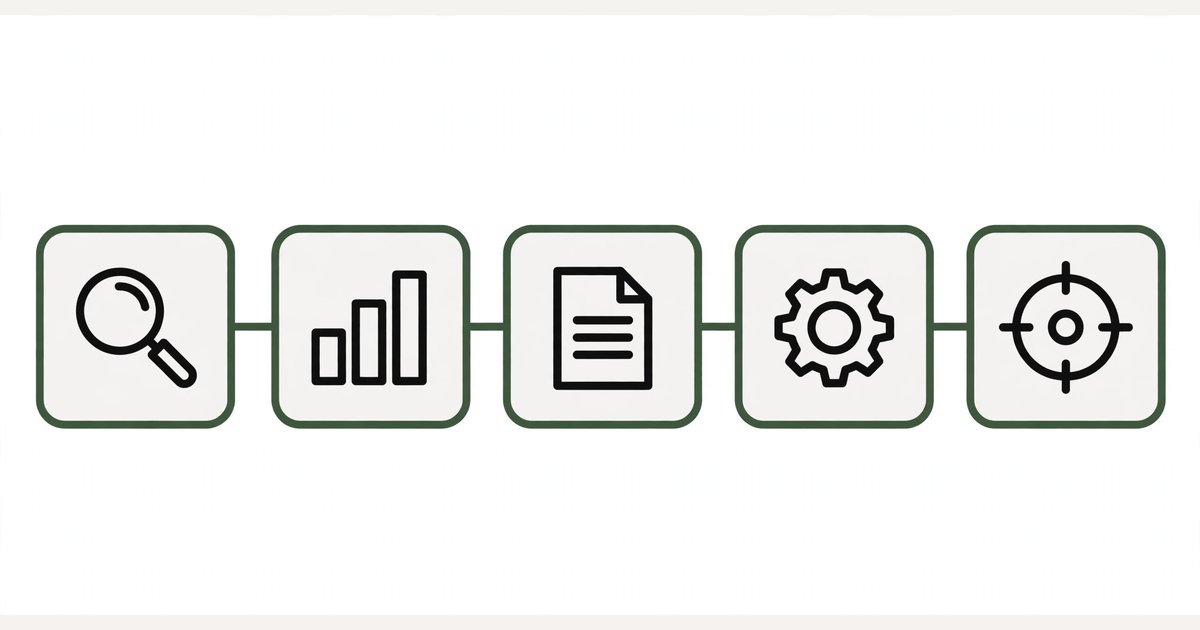
B2B seo tools are the software an agency uses to research, build, track, and report SEO for business to business clients. B2B buyers take longer to decide, search in groups, and compare vendors before they talk to sales. The tools must fit that longer, group buying path, not a quick consumer purchase.
This post sorts the tools by job, shows how to pick a stack for a B2B client, and names the mistakes agencies make when they buy. It does not rank tools by brand, because prices and features change, and a ranking that ages badly helps no one. Check current pricing on each vendor page before you buy.
What b2b seo tools do, in six jobs
Every B2B SEO job falls into one of six groups. If a tool does not fit a group, it does not belong in the stack. The table below names each group, its job, and the question it answers for a client.
| Group | Job | Question it answers |
|---|---|---|
| Research | Keywords, topics, buyer intent | What does the buying group search for? |
| Technical | Crawls, audits, speed checks | What stops the site from ranking? |
| Content | Briefs, outlines, gaps | What page should we write next? |
| Links | Backlinks, mentions, outreach | Who links to us, and to rivals? |
| Tracking | Ranks, traffic, conversions | Did the work move anything? |
| Reporting | Branded reports, dashboards | What do we tell the client? |
Our parent guide on b2b seo content sets the strategy these tools serve. Tools without a strategy produce reports. Strategy without tools produces guesses. You need both, in that order.
The six groups, and what each one is for
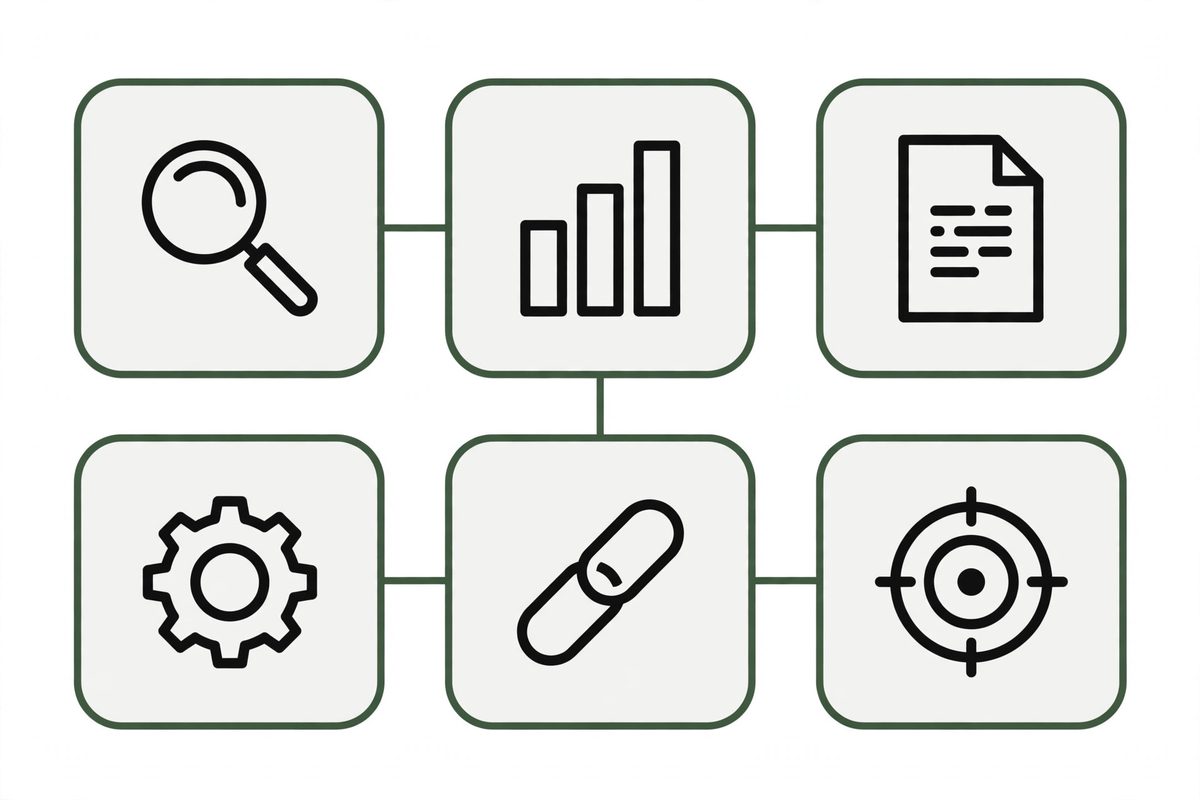
Research tools find the terms a buying group uses at each stage. Early stage terms are broad and problem based. Late stage terms name products, comparisons, and vendors. A B2B stack must cover both, because the same deal may start with a broad search by one person and end with a comparison search by another.
Technical tools crawl a site the way a search engine does and list what blocks ranking. Broken links, slow pages, missing titles, and crawl blocks are the usual finds. Google Search Console covers part of this job free, and every stack should start there before adding a paid crawler. The SEO starter guide and Search Console help set the baseline every paid tool should beat.
Content tools turn research into briefs. They show what top pages cover, what questions they answer, and where a gap sits. They do not write the page for you. A brief is a plan, and the plan still needs a writer who knows the buyer.
Link tools track who links to a site and to its rivals. For B2B, link quality beats link count. A link from a trade publication or an industry body carries more weight for a B2B buyer than dozens of thin directory links. Judge link tools on the quality of their index, not the size of their count.
Tracking tools watch ranks, traffic, and conversions over time. For B2B, track by buyer stage, not only by keyword. A term that brings researchers matters differently from a term that brings buyers ready to talk. Mix the two in one report and the report misleads.
Reporting tools turn all of the above into a client facing view. A branded report or dashboard with your agency name keeps the client relationship yours. Unbranded tool exports hand the client a reason to ask why they need you.
How to pick tools for a B2B client

Pick with four tests, in this order.
- Job fit. Does the tool do one of the six jobs above, for B2B terms and pages? If not, skip it.
- Data trust. Can you check its numbers against Search Console or Analytics? If its numbers cannot be checked, do not report them.
- Time cost. How many hours a month does setup, upkeep, and reporting take? A cheap tool that eats 10 hours a month is dear.
- Exit cost. Can you export your data and history if you leave? A tool that locks your history in is a future bill, not a present saving.
Run a trial on one real client, not on a demo account. Demo data flatters every tool. Real client data shows where the tool strains. End the trial with a real report, and ask whether the client learned anything from it.
A starter stack for a small agency
A small agency serving B2B clients can start with free tools plus one paid tool, then add paid tools as client count grows. Google Search Console and Google Analytics 4 cover tracking basics free. A rank tracker is usually the first paid add, because clients ask where they rank before they ask anything else.
Work the money question with posted prices, not guesses. Our Growth plan for done-for-you SEO is $1,500 a month, and agencies resell it at $3,200, keeping $1,700 in margin. If your tool stack plus your hours for one client costs more than that margin, or eats the hours you need for sales, the stack is losing you money even when its fee looks small. Run that comparison per client, not per tool.
Add tools in this order as you grow. Rank tracking first. A crawler second, when technical work grows. A research tool third, when content volume grows. A reporting tool last, when manual reports eat more than a day a month. Buying in reverse order buys polish before it buys results.
Measuring B2B results with the stack
B2B results need pipeline language, not traffic language alone. Track these four stages for each client, and keep them in the same report.
- Visits from search, split by buyer stage where the data allows it.
- Leads from search, meaning form fills, calls, and demo bookings.
- Qualified leads, as the client defines them, not as the tool defines them.
- Pipeline and deals the client ties back to search, on the client word, not on a tool claim.
Two cautions apply. First, attribution in B2B is partial. A deal may touch search, ads, events, and referrals before it closes. Report what search contributed, and say what it did not touch. Second, never report a revenue number the client has not confirmed. A tool estimate of revenue is a guess with a chart around it.
Mistakes agencies make with tools
- Buying for the demo. Demo data is clean. Client data is not. Trial on a real client first.
- Stacking five tools for one job. Overlap wastes fees and creates conflicting numbers.
- Reporting tool numbers without checks. If a number cannot be checked in Search Console or Analytics, leave it out.
- Tracking consumer terms for a B2B client. High volume terms that bring job seekers and students are not buyer terms.
- Letting the tool set the strategy. Tools report the past. Strategy decides the next page, and that decision stays human.
- Ignoring exit cost. A stack you cannot leave is a bill that grows with you.
Who this is not for
A tool stack alone is not for an agency with no one to run it. Tools do not plan, write, or judge. If no one on your team can act on what a tool reports, a done-for-you service fits better than a larger stack. Our white label seo services for agencies cover delivery under your brand, including the branded monthly report, so your team can stay focused on clients.
If you do run tools in house, keep the stack small and the strategy first. One tool per job, checked numbers, and a report the client can read in five minutes will beat a large stack that no one fully uses.
Frequently asked questions
What are the seo tools helpful for b2b businesses?
The helpful tools cover six jobs. Research, technical checks, content briefs, link tracking, rank and traffic tracking, and branded reporting. A tool helps when it fits one of those jobs for B2B terms and pages, and when its numbers can be checked against Search Console or Analytics.
What are the best seo platforms for b2b?
The best platform is the one that fits your client job, your hours, and your exit terms, not the one with the longest feature list. Test on one real client, check its numbers against free sources, and confirm you can export your history before you commit to a yearly plan.
What are the best b2b seo tools?
Start free with Google Search Console and Google Analytics 4, add a rank tracker first, then a crawler, a research tool, and a reporting tool as client count grows. Buy in that order, and skip any tool whose job your current stack already covers.
Do I need paid tools to start?
No. Search Console and Analytics 4 cover the basics free, and they are the sources paid tools check against. Add a paid tool when a job takes more time by hand than the tool fee plus its upkeep costs, or when a client asks for a view the free tools cannot give.
Can one tool cover everything?
One tool can cover several jobs, but rarely all six at the same depth. All in one tools suit small stacks well and strain at scale. Judge an all in one tool on its weakest job, because that weak job is the one you will replace first.
The next step is a trial, not a purchase. Pick one real B2B client, run the four tests above on your current stack, and note which job is weakest. Then read our parent guide on b2b seo strategy for agencies for the strategy the stack serves, or book a 30 minute call if you would rather hand delivery to a team and keep the client work.
To plan the wider campaign around these tools, the b2b seo search marketing guide maps SEO to each funnel stage.